Whistleblower hotline: (213) 785-6098
mayorsam@mayorsam.org

Thursday, January 10, 2008

Thursday Late Night Snack

Westside homeowners couldn't toss out Jack Weiss but managed to broker a deal to get over $7 million from developers. However, its not the HOA's that are seeing the money.

Used to be your home was your castle. Now if crotchedy old white ladies in your hood think you contracted the deadly "mansionization" disease, you're going to have to build your house the way Tom LeBong thinks is in "character" with the neighborhood. Interesting that Jose Huizar has said hold the phone - but he's probably just thinking about tax dollars and campaign contributions than slipping into a free market mentality.

Not sure if this is in "character" with the neighborhood, but some folks are building homes out of old cargo containers. Sounds like a great idea to recycle!

A market based incentive to deal with traffic - toll roads could be coming to LA!

Internet radio host Sarah Symonds is doing a show Saturday on "The Risky Business of Having an Affair," which will prominently feature Mayor Villaraigosa.

As a member of a Neighborhood Council this has me scared - a proposal under consideration would allow each Council to introduce three City Council motions per year. I'm not sure we're ready for this. But then again, democracy is not supposed to be pretty.

Labels: , , , , ,

Wednesday, January 09, 2008

Mayor Sam's Hotsheet for Wednesday

We reported Tuesday that a developer who had contributed significantly to Councilman Jose Huizar was denied to build a major condo development downtown by a zoning administrator. Later in the day Councilman Huizar secured passage of the Clowncil taking jurisdiction from the Planning Comission, making the development more likely to happen now. The developer, David Seewack, told Downtown Blogger Don Garza, "I feel fantastic!" Now if we allowed the market to dictate land use in the City developers wouldn't have to pay off Clowncil members and things would be a lot less shady.

In an audit of City legal settlements Controller Laura Chick said :Los Angeles' approach to potential lawsuits is "reactionary and knee-jerk," often wasting taxpayer money in costly settlements and court judgments that could have been avoided. " Ya think?

The Pico Neighborhood Council is opposing the Mayor's Pico-Olympic traffic plan and is seeking signatures on its online petition.

LA County Supervisor Mike Antonovich reports that social spending on illegal immigrants was up $3 million from September in November.

The City of Los Angeles has won awards for its floats in the Tournament of Roses Parade only eight times in nearly 80 years. If you saw this year's uninspired entry of floral covered cargo ships you'll know why. Though I don't know if this parade entry featuring Clowncil members was any less ridiculous than this one.

Labels: , , , , , , , ,

Tuesday, December 18, 2007

Ominbus bill includes clearing path for Subway to Sea

There is likely to be a small victory for the Mayor's office, and a larger one for commuters in the City of Los Angeles, when the current omnibus spending bill clears Congress. The bill includes repealing of the prohibition that Waxman sponsored in 1986 that prevented the Red Line spur (now known as the Purple Line) from extending to the Westside. Sign On San Diego has the details.

The federal prohibition was originally pushed in 1986 by Democratic Representative Henry Waxman of Los Angeles. Waxman said at that time he feared construction could cause explosions of naturally occurring methane gas, something that had happened the year before. New research has convinced him and others that it can be done safely.


Right. Anyway, the Bill has cleared the House.

Labels: , , ,

Friday, December 14, 2007

Carbon Offsets

I am fortunate that my home and office are in the same neighborhood and I am able to walk the three blocks from my home to work and back, including some days walking to a local store to pick up groceries or restaurant to have dinner. I do this about four days a week, depending on if I need my car to visit a client on a given day.

So I may be able to completely skip driving as much as four days out of the week.

I'd like to know what my carbon offsets are by doing that and I'd like to sell them to one of you polluters.

Answers?

Labels: , ,

Friday, November 30, 2007

Mayor Sam's Hotsheet for Friday

Well known Silver Lake activist Jason Lyon was booted from the local neighborhood council when city arbiter Michael de la Rocha ruled that Lyon had allegedly violated election rules by using a neighborhood council email list to campaign for office. At the same time the arbiter strongly urged DONE to develop stricter rules around the use and maintenance of such lists.

The next time you hear a politician saying we need money for government services and we need to raise taxes, remember this bit of news: A county agency spent $1.2 million on printer toner in one month - enough toner to last for four years, except the toner only has a shelf life of two.

Here's the latest on the Coliseum-USC battle: 1) The Mayor throws the Coliseum under the bus, 2) The LA Times is worried the stadium will become a relic and 3) County Supervisor Don Knabe may be worried he's not going to get free SC home games tix anymore.

Some goofy liberals think that building major housing developments without parking will get people to ride buses. Other goofy liberals think that same plan is part of some conspiracy to make driving and parking only for the rich.

Skid Row has been a seething urine-soaked cesspool for decades. Now, artists, developers and others are coming in to clean up the place and make it livable. For some reason that's considered evil. What's really evil is that the homeless - of whom 90% are mentally ill and in need of institutionalization - are allowed to be homeless and are enabled in their socially and personally destructive behaivors by the liberal elites in this city.

Fresh off his street sweeping performance, Clown Prince of the City Clowncil Tom LeBong is the latest elected after your wallet. Once content with only putting lights on statues in dangerous parks, LeBong wants a parcel tax for transit.

Thanks to the amazing efforts of several companies of Los Angeles Fire Department firefighters, a building in the Fashion District was save major damage when hit by a recent blaze.

Once again in the news, Rodney King was apparently shot in the face with some type of gun in San Bernardino. King's injuries were minor and he was sent home following treatment.

CurbedLA wonders if the Westin Bonaventure Hotel in Downtown LA is cool or not. As a kid when the hotel was new, I remember getting a big kick out of riding the vacuum tube looking glass elevators than run on the outside of the building.

We cried foul when Tom LeBong got the City to pony up a few hundred grand for the Hollywood Santa Parade at the same time funding was cut for the pedal boats at MacArthur and Echo Parks, something enjoyed by low-income families. A Christmas Miracle has happened because once again the City figured how to bring the boats back.

No, it has nothing to do with his recent breakup with his soncha, but Mayor Villraigosa is getting an AIDS test. Yea, its another photo op but maybe it will do some good to encourage testing. Though I can't imagine too many people are sitting around saying "Well I should have an AIDS test but I wasn't going to hassle with it. But I'm going to get one now that Mayor Villaraigosa got one!"

Labels: , , , , , , , , ,

Monday, November 26, 2007

Mayor Sam's Hotsheet for Monday

City Planner Jack Chiang - following a bonehead call to an opponent of a development project in Valley Village - has been taken off the project, pending the development of a "code of conduct" by the City Planning Department. In the meantime, writing at LAist Zach Behrens picks up on spin on the matter from the City Attorney's office.

Writer Earl Ofari Hutchinson takes the City Council to task for the current budget mess. Hutchinson says the city has been on a "runaway train" when it comes to spending, one "jampacked with big salary increases for city officials and managers, out-of-control spending on construction projects, and ballooning workers' comp and pension payouts."

Zuma Dogg and friends offer Sister City readers a new service, stock picks and investment strategy. Chat it up here.

Capitol Weekly calls into question the tribal legitimacy of the Santa Ynez Chumash Indians, owners of the Chumash Casino near Solvang. As well, they make the claim that Tribal Chairman Vincent Armenta has a minimal amount of Native American blood and can't even trace his roots back to the tribe.

Yet another dream transit map over at LAist.

The Long Beach Press Telegram editorializes in favor of the Long Beach City Council cutting back on public comment. Among the moves taken by the Council; removing the ability of citizen comments to take items separately much like the filing of public comment cards call an item "special" in Los Angeles.

Labels: , , , , , , ,

Sunday, October 14, 2007

Interstate 5 Update

Here are some updates on the closing of Interstate 5 due to a massive truck crash inside a truck route tunnel on the southbound truck tunnel Friday.

Southbound lanes should be re-opened before 6:00 a.m. Monday, however due to the tunnel closure truck traffic will have to join vehicular traffic making the usual mess even worse. Northbound lanes with the exception of two truck lanes that have been opened to all traffic will remain closed for at least another 24 hours.

For more details, information and views on the situation click read more.


Metrolink officials have added additional trains and added cars to existing trains for service between the Antelope and Santa Clarita valleys and Los Angeles. For more information click here.

For alternate routes through the traffic click here.

Current traffic conditions can be found here.

Channel 4 takes a look at the "fragility" of Interstate 5 through the Newhall Pass, as its really the only way in and out of LA to Northern California and beyond. Twice in the last 30 years the highway was significantly damaged during earthquakes.

Perhaps its time to bite the bullet and build an additional outlet. Big task I know.

Labels: ,

Wednesday, October 10, 2007

Parking and Transportation: Let the Market Decide

LA City Officials including former goofy Clowncilman and Social Engineer Mike Woo have the goofiest of goofy ideas that is sure to get the NIMBY's panties in a bunch.

They want to allow developers to build high density housing without parking. The idea is that if there is nowhere to park at your place you'll be forced to use public transportation. Yes, there are actually people who come up with this stuff. “The carrot isn’t working (to get people to use public transportation),” says Planning Commissioner Mike Woo, “now it is time for the stick … I want to create a parking crisis that will force people out of their cars.”
"I want to create a parking crisis that will force people out of their cars.”
Mike Woo
Now the libertarian in me says that yes, developers should not be forced to provide parking. And if they didn't, the market will provide. Here's how.

If a development does not provide parking I have to consider the cost to me of living there. I am going to have to 1) take my chances parking on the street and park some distance from my home or 2) pay for a parking spot elsewhere as is done in New York City, or 3) dump my car and take public transit. Any of these choices MIGHT be attractive to me IF it reduces the cost of my monthly rent. On the other hand, I might prefer to rent a home where parking is provided. Either scenario would have to be taken into consideration by a developer much in the same way as the developer deciding to include a swimming pool or a weight room or air conditioning in an apartment development.

When it comes to public transportation those with cars are not avoiding it because they get a free parking place. Its because public transportation in Los Angeles for the most part, well, sucks.

If there was effective and better public transportation (some of which could be provided by private enterprise) more people would use it and get out of their cars.

Silly games like those proposed by goofballs like Woo are hardly the answer.

Labels: , ,

Friday, September 07, 2007

Get LA Moving Again

Residents on the Eastside are looking forward to the completion of the Metro Gold Line Eastside Extension, effectively connecting communities such as Boyle Heights and East LA to the rest of the city.

In the meantime folks on the Westside crammed on buses might just want to rue the name of Congressman Henry Waxman who twenty years ago banned funding for the Red Line extension to the Westside.

However funding approved today by the California Transportation Commission helps to move closer to reality extending the Expo Line from its planned Culver City terminus to Santa Monica.

And Zach Behrens is one of the few guys who is actually brave enough to say what a joke the Orange Line is.

Labels: ,

Thursday, July 12, 2007

Bradbury's Monorail Idea is so Old School

Tammy Bruce and others aren't going to like this but it has to be said. Ray Bradbury is an excellent writer who has penned many classics but at age 87 he is a blabbering fool when it comes to transportation issues in Los Angeles.

For years Bradbury has had a major woody for monorails as a transportation solution in Los Angeles even though there are many, many operational and logistical reasons why such a system wouldn't work. LAist has video of Bradbury once again rattling on about monorails. If you want to explore something beyond busways, light rail and subways personal rapid transit (PRT) might be the perfect hybrid of mass transit and the independent LA car culture.

Lets just not hope people use their sentimental attachment to Bradbury as a reason to implement a poor transportation decision. We already have folks like Zev Yarovslasky who can make these poor decisions on his own.

Labels: , , , ,

Thursday, July 05, 2007

The Transit Coalition e-Newsletter, Thurs., July 5, 2007

The Transit Coalition eNewsletter


Weekly Transit eNewsletter
Thursday, July 5, 2007
Volume 3, Issue 27


Welcome to an The Transit Coalition weekly newsletter! Our organization participates in meetings with key decision makers and community leaders and our goal is to keep you informed on the latest developments in the transportation scene across Southern California.

Action Alert: High Speed Rail would receive an augmentation of $55 million under a deal stemming from the state Budget Conference Committee. $40 million would be allocated from the Public Transportation Account and $15.5 million would come from the unspent Proposition 116 rail bond funds (1990). Also, conferees reached a compromise on the California FY 08 budget that partly restored “Spillover” funds for transit operations. $749 million from the $1.3 billion Spillover and transit funds was allotted for public transit operations, while the remaining $551 million will go to various pots for transportation. However, subject to further negotiation among legislative leaders, the budget must now go to the desk of Governor Arnold Schwarzenegger, where a line-item veto absolutely remains a threat.

At this time, please direct your emails towards the governor's office, expressing your support for full funding of this critically important project and the transit dollars needed to keep buses and trains moving.

Better yet, do any of the following:

(1) Call Governor Schwarzenegger at 916-445-2841;
(2) Fax the Governor at 916-327-1009;
(3) Call Senator Don Perata at 510-286-1333 or 916-651-4009;
(4) Contact Assembly Speaker Fabian Núñez at 916-319-2046 or Speaker.Nunez@assembly.ca.gov;
(5) Contact Senate Republican Leader Dick Ackerman at 916-651-4033 or http://republican.sen.ca.gov/web/33/feed.asp; and/or
(6) Get your friends and family who live in the Central Valley/Fresno area to contact Assembly Republican Leader Michael Villines at 916-319-2029.

(Contact information courtesy of BayRail Alliance.)

Los Angeles County Supervisor and Metro Board member Zev Yaroslavsky has been at the forefront of transportation improvements in Southern California. His efforts to improve public transportation were the subject of an interview with Metro Investment Report. Yaroslavsky revealed that much of the traffic headaches can be found on the Westside. While options such as converting Olympic and Pico Blvds. are considered (it being the subject of a recent town hall meeting), rapid transit will still play a major role in Westside mobility. "In looking at the long term, the extension of the subway offers the most promise," Yaroslavsky concluded.

Santa Barbara and Ventura Counties get ready for two major transportation projects: A widening of the 101 Freeway and 2 new sidings along the Union Pacific Coast route. Placentia got some train horn relief when a "quiet zone" through the city went into effect last weekend. Similarly, work begins to reroute Union Pacific train tracks in Pomona, which promises relief from train noise and vibrations.

Amtrak and GrandLuxe Rail Journeys (formerly American Orient Express) are teaming up to attach seven special GrandLuxe cars to regularly scheduled Amtrak trains. More than 90 departures are scheduled from November to early January. The new service, dubbed GrandLuxe Limited, will be available on the California Zephyr from Emeryville to Chicago and on the Southwest Chief from Los Angeles to Chicago .

A recent study on how transit-oriented developments in Los Angeles affect travel behavior revealed disappointing results: Few people who live in them actually use the transit system. Worse yet, the amenities that come with them tend to attract more traffic. The Los Angeles Times performed its own survey of TOD residents that concluded most of them still used their car to work, largely because rail lines do not reach desired destinations and job centers are moving away from transit centers. Nevertheless, proponents believe TODs will be a crucial element to rein in growth and mobility from now on.

So how does it feel like to commute between the Inland Empire and Orange County ? Take a look at this article from the Riverside Press-Enterprise. One particular Metrolink commuter revealed that driving from her home in San Bernardino to her work in Stanton would take 3 hours, whereas taking Metrolink for part of the trip reduces the travel time to 2 1/2 hours.

Thank you for your donations! We would like to express our gratitude for your donations, which help us prepare materials and educate elected officials, community activists and business leaders on transportation issues. If you have not done so yet, you can still donate and join The Transit Coalition. A monthly subscription to Moving Southern California comes with your membership. Visit our new and improved Donations page to explore other options. Your contribution is greatly appreciated.


Would you like to drive down the Santa Monica Freeway, without actually handling the steering wheel? If you can't find a chauffeur, perhaps the " smart car" would suit you. Scientists are studying ways of completely automating car travel. Engineers believe Intelligent Transport vehicle systems can solve numerous ailments of driving, from road capacity management to accident prevention.

As if it wasn't common knowledge already, the Reason Foundation would like you to know California drivers deal with some of the worst traffic in the nation. Their ostensibly reliable report concluded that only six other states have traffic worse than here. However, most believe that the expense and difficulty of obtaining right-of-way makes freeway expansions prohibitive. In response, some believe congestion pricing ( perhaps at LAX) can help ease existing road capacity, while others believe public transportation is the way to go.

Los Angeles Councilmember Bill Rosendahl mulls a motion to ask Santa Monica to mitigate any traffic in Pacific Palisades resulting from construction of an upgraded California Incline. Snazzy credit card parking meters went up on the curbs of West Hollywood and Beverly Hills , even as Los Angeles considers doing the same. Caltrans is finishing up work on 29 projects in the state that promise immediate congestion relief. Readers respond to concerns (and a Daily News editorial) that carpool lanes in Southern California are clogging up. ( Map)

South Bay Representative Maxine Waters introduced a bill in Congress that would prohibit the relocation of the northernmost runway of LAX. Residents have long opposed the controversial proposal since it would bring the runway hundreds of feet closer to Westchester. Rosendahl stalled the proposal earlier this month by demanding a review of runway safety that would take new technologies into account.

Officials from the ports of Los Angeles and Long Beach delayed consideration of its Clean Trucks Program, which offered sweeping changes to port operations including banning owner-operators from entering the port. The Clean Trucks Program would allow only trucks that were licensed concessionaires, driven by company employee drivers and would have to meet 2007 emissions standards by 2013. Any truck built before 1989 wouldn't be allowed onto the port after January 1. To promote cleaner rigs, 27 truckers staged a convoy down the Harbor Freeway, with little recognition from passing cars.

Meanwhile, shippers and their clerical workers continue labor contract negotiations. A walkout, which has been authorized by laborers, threatens to shut down the ports. Further south, a proposed megaport in Colonet , Baja California , could act as a safety valve that could give ports north of the border some relief form burgeoning Asian imports.

The recently adopted FY 08 budget for Alameda Corridor Transportation Authority reflects a booming business for the below-grade freight rail route. Cargo volumes through the Alameda Corridor have increased to more than 54 freight trains and 13,600 twenty-foot containers daily, twice the amount from when the railway opened in April 2002. ACTA estimates it will collect more than $95 million in user fees and container charges next year, in addition to government grants. The budget also forecasts $27.1 million for capital expenses and $80.4 million for debt repayment.

One of the most ubiquitous cars on the planet can be found in droves on the streets of India . The Ambassador is not exactly a car that screams luxury and high class, with its derby-hat-like design and all. Nevertheless, the car has been an iconic figure in the subcontinent for the last 50 years. Indeed, white-colored, window-tinted versions of the car are often used to transport political figures, to the point where some say that India is governed in the back seat of an "Amby".

Shameless Plug: The Thunderhead Alliance is an organization dedicated to providing bicycle and pedestrian advocates the tools necessary to carry out and win campaigns. The Thunderhead Training seminar, an intense curriculum on how to effectively fight for improvements, is coming to Los Angeles on August 24-26. Here, you can learn from expert coaches and each other through Thunderhead's proven curriculum on choosing, directing, and winning campaigns and to promote complete streets, where walking and bicycling are safe and commonplace. You can view the schedule or register for the event (the latter form features registration fee information).

Announcement: The Riverside Transit Agency is offering express beach bus service, departing from Temecula and Murrieta shortly before 9 a.m. and arriving at Oceanside an hour later, for a round-trip fare of $3.75.The bus offers riders free satellite television and wireless Internet access. There are three buses each way during the week.

Here is a list of other recent developments:

June 26: Union Pacific submitted a modernization plan for its Intermodal Container Transfer Facility to the Port of Los Angeles . UP plans to replace 10 diesel-powered gantry cranes with 39 electric-powered, railmounted cantilever gantry cranes. The new cranes will enable the company to remove 71 of its 73 diesel-powered truck tractors. The remaining two diesel trucks will be replaced with alternative-fuel vehicles, according to the company.

June 27: A Los Angeles Superior Court judge refused a request by the Bus Riders Union, Labor/Community Strategy Center and Natural Resources Defense Council to prevent Metro from raising fares. The request was submitted too late, according to the judge. Additionally, the petitioners did not adequately explain how the increases would go towards rail projects. Metro argued that the increases would only pay for transit operations.

June 28: The Metro Board adopted the FY 08 budget, which forecasts slightly increased bus service, eight new Rapid Bus lines, and a rehabilitation of subway cars and replacement of Blue Line light rail cars. Board members also voted to study "fixed guideway" options for three transit corridors, including Wilshire Blvd. The Board also voted to study congestion pricing, since Metro and the Los Angeles Department of Transportation lost out on a major federal grant that would fund implementation of such a scheme.

July 1: Metro, the Big Blue Bus, and Omnitrans increased their fares. Most users expressed resignation at the fare increases. A Los Angeles Daily News editorial expressed disenchantment, but also believed car travel was actually becoming a cheaper alternative to public transportation. In other news, fees to use the 91 Express toll lanes in Orange County also increased. Go figure.

To Close: Would you ride this to work?


If this is the future of public transportation, then keep us in the loop! (Persons with heart, nervous or other bodily problems and those who are nursing should probably not board.)

Upcoming Events: Exposition Metro Line Construction Authority: Thursday, July 5, 2:30 p.m., Kenneth Hahn Hall of Administration, Board of Supervisors Hearing Room 381B, 500 W. Temple St., Los Angeles .

Angeles Chapter Sierra Club Transportation Committee: Thursday, July 5, 7:30 p.m. Angeles Chapter office, 3435 Wilshire Blvd, Suite 320, Los Angeles. CANCELLED.

Orange County Transportation Authority Board Meeting: Monday, July 9, 9 a.m., Board Hearing Room, 600 Main St., Orange .

Metro San Gabriel Valley Governance Council: Monday, July 9, 5 p.m., 3369 Santa Anita Ave. (near El Monte bus station), El Monte .

Metro San Fernando Valley Governance Council: Monday, July 9, 6:30 p.m., Marvin Braude Constituent Center, 6262 Van Nuys Blvd., Van Nuys.

Metro Westside/Central Governance Council: Wednesday, July 11, 5 p.m., La Cienega Tennis Center, Sunset Room, 325 S. La Cienega Blvd., Beverly Hills.

Metro Gateway Cities Governance Council: Thursday, July 12, 2 p.m., Gas Company ERC, 9240 Firestone Blvd., Downey.

Metro South Bay Governance Council: Friday, July 13, 9.30 a.m., Carson Community Center , 801 E. Carson St., Carson.

SCRRA (Metrolink) Committee Meetings: Friday, July 13, 10 a.m., SCRRA Offices, 700 S. Flower St. , 26th floor, Los Angeles.

Southern California Transit Advocates: Saturday, July 14, 1 p.m., Angelus Plaza , Rm. 422, 255 S. Hill St., Los Angeles.

Consider attending our monthly Transit Coalition Dinner Meeting on Tuesday, July 24 - 7 p.m. to 8:30 p.m. at Philippe The Original, 1001 N. Alameda St. Los Angeles CA 90012. ( Map.) We hope to see you there!

SCAG MagLev Task Force: Thursday, August 9, 10:00 a.m. SCAG Offices, 818 W. Seventh St. , 12th floor, Los Angeles . July meeting cancelled.


Missed last week's newsletter? Read it here!

Get the Print Edition of Moving Southern California, our monthly newsletter. Request a sample copy.

Contact Us:
We welcome your thoughts and comments on our new electronic newsletter. Please write us:
Bart Reed, Executive Director
Numan Parada, Communications Director


About The Transit Coalition:
The Transit Coalition is a 501[c](3) non-profit whose goal is to increase Transit Options and Mobility in Southern California by mobilizing citizens to press for sensible public policy to grow our bus and rail network.

As a grass roots group, we depend upon your contributions to allow us to pursue our important work. Add yourself to our mailing list and please donate to help us grow.

Visit our Discussion Board for the latest dialogue on transit.

Labels: , , , , ,

Monday, July 02, 2007

Can-Do Society


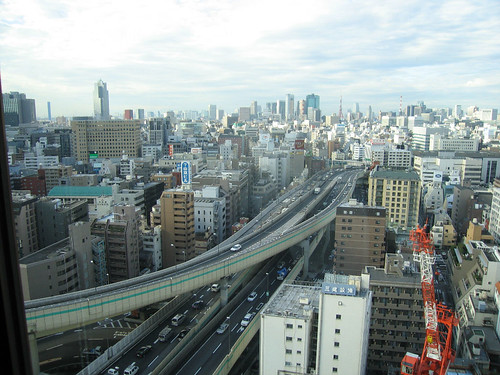
Downtown Tokyo, originally uploaded by pbev.

Point out that additional freeway capacity must be central to any infrastructure plan that honestly expects to accommodate a growing Southern California population, and seven times out of ten you'll get a response adhering loosely to the following script:

“We can't double-deck the freeways in Los Angeles—one big earthquake and they’d collapse.”

In my experience, the earthquake card is typically played by people who are dogmatically opposed to cars—and, by extension, freeways. These folks aim to end debate early (before it turns philosophical), and operate on the assumption that you won’t take to the Internets, where, among other things, you can find photos of multi-level freeways snaking through Tokyo and Taipei—places, of course, where the ground shakes with greater ferocity and frequency.

Truth is, for all the big talk of transforming Los Angeles into a world-class “Jewel of the Pacific,” the Asians are, quite frankly, shaming us in the department of rolling up the sleeves, embracing the latest technological and engineering advances, and doing right by the people.

As they build the necessary infrastructure, we continue to spin our wheels and sink deeper into the mud; electing people politicians who campaign, cynically enough, on “bold ideas.”

Today, our cars run on fossil fuels. Perhaps, someday, we’ll all be pulling into hydrogen fueling stations. How we ultimately fill our tanks is yet to be determined, but one thing is crystal clear: most of us will not give up the Los Angeles lifestyle to live in Los Angeles.


Labels: ,

Transit Oriented Development Fails to Yield Results

Transit oriented development is a big buzz word and provides lots of promise for politically connected developers who want to build housing near rail and bus stations. However, an LA Times report shows that it's had little impact on traffic and transit usage.

I can relate. I live in one of the showcase transit oriented development villages in LA, the NoHo Arts District and until yesterday did not use the Red Line in the seven months I've lived here. I could use the Metro Orange Line to commute to my office in Sherman Oaks but have never done it. However I can say that the retail development clumped around finds me making more walking trips for tasks that required a drive when I lived in a suburban section of Sherman Oaks, so perhaps that is the key, growing more retail and business along the transit stops and not just housing.

In the meantime, its going to get more expensive to use that transit if you do get around to it - the Metro Day pass is going from $3 to $5, a 66% price increase. And the City of LA is getting around to taking a look at updating it's Commuter Express bus service for the first time in 22 years.

Labels: , , ,

Wednesday, June 06, 2007

The Transit Coalition e-Newsletter, Tues., June 5, 2007


Weekly Transit eNewsletter
Tuesday, June 5, 2007
Volume 3, Issue 23


Welcome to an unusually long The Transit Coalition weekly newsletter! Our organization participates in meetings with key decision makers and community leaders and our goal is to keep you informed on the latest developments in the transportation scene across Southern California.

Write to the Governor! Two thirds of California’s Congressmembers signed a letter urging Governor Arnold Schwarzenegger to fund high speed rail development at a larger amount than proposed. Meanwhile, critics openly articulate their opposition to high speed rail and aim to derail the project entirely. HSR proponents need your help by writing a letter to the governor to this address and expressing your support for the project!

Moreover, the governor continues to push for the diversion of “Spillover” funds away from transit operations. Instead, Schwarzenegger flew to Vancouver, British Columbia, to see private enterprise build and operate rail lines and extol their virtues. One letter in the Pasadena Star News condemned the governor for shortchanging transit in its hour of need, while several others in the Los Angeles Times bemoaned the lack of support towards public transit in general. However, state Business, Transportation and Housing Agency director Dale Bonner defended the governor, saying that Schwarzenegger has in fact done more for public transit than any predecessor. The proposal also could scale back rehabilitation of the aging San Diego Trolley.

Grumbling continues on the imminent fare increases on Metro bus and trains. Students at Grover Cleveland High School in Reseda signed a petition in hopes that the Metro Board would reconsider the increases. The Bus Riders Union vowed to file an injunction as a last ditch effort to stop the increases. The increases will hardly do anything about bringing more transit projects to the forefront. The increases mark another blow to Los Angeles Mayor Antonio Villaraigosa, whose political skills have been on the skids of late. Meanwhile, Foothill Transit also mulls an increase in pass prices, while leaving one-way cash fares alone at $1.

Increases in fuel prices are largely to blame. Some noted that the governor has ignored the issue even as a recent poll revealed that it was the number one concern among Californians. However, Santa Clarita Transit is relying on private companies that operates their buses to keep costs low. Some are also celebrating at a recent study that concluded that Californians produce less carbon dioxide emissions on a per-capita basis than residents in most other states, partly due to tough fuel and vehicle requirements.

Still, some solace can be found. The Metro FY 08 proposed budget foresees a slight increase in late night service while bringing new Rapid Bus lines into the picture. More rail cars and highway construction also figure in the proposed budget. Metro has scheduled meetings on the matter, listed in our Upcoming Events section. These small solutions, however, have not stopped people from clamoring for a subway down Wilshire Blvd., though Metro would quickly remind some that the Alternative Analysis Study underway will look at all modes and corridors in the area, including at- and above-grade options.

Traffic is now affecting our social lives to a considerable extent, according to columnist Steve Scauzillo, who until recent times enjoyed relative proximity from his home in Temple City to cultural, entertainment and sports venues in Los Angeles and Orange Counties. Also, writer Dan Bernstein shared his knowledge of the little-used trolley buses in downtown Riverside and a recent attempt to boost ridership.

However, syndicated columnist Rich Lowry would like you to believe that our supposed love affair with cars should overlook that and move away from building more mass transit. Lowry claims that car travel is more economical than other forms of travel, conveniently ignoring maintenance and hidden costs of auto use. Of course, this love affair is not good enough to save the hybrid Honda Accord from the brink of extinction.

On a sadder note, the state Appropriations Committee nixed legislation by Assemblymember Ted Lieu to create a construction authority for a Green Line extension through LAX. Metro previously revealed that the Green Line extension in question is not even under consideration.

Donate and Join The Transit Coalition: We have a tough fight, as the Mayor and some media want to kill or damage rail transit. Your financial help is needed to build opposition to these ill informed actions. Do you want to save and improve transportation in Southern California? Would you like to keep informed on what is happening in the transportation scene? Then please donate and join The Transit Coalition. A monthly subscription to Moving Southern California comes with your membership, as well as this weekly eNewsletter. Visit our Donations page to explore other options. Your contribution is greatly appreciated.


Ventura County commuters and traveling motorists will ride on a widened Santa Clara River bridge on the 101 Freeway in mid-August. 5 lanes were added to the original 7-lane bridge, making it the largest road project in the county. Design revisions delayed the project from its intended completion in 2006 and pushed construction costs to $85 million.

Meanwhile, Caltrans hopes it can reduce the number of traffic collisions in California through electronic devices on new cars that warn drivers of oncoming road dangers. Work commences on new carpool lanes for the 60 Freeway in San Gabriel Valley, while a widening project on the 118 Freeway in Simi Valley awaits a vote from the California Transportation Commission. The same commission will vote on improvements to the notorious State Highway Route 138 in the Antelope Valley.

The San Bernardino Associated Governments endorsed an amendment to AB 947, which would exempt projects on existing interchanges and overpasses from the environmental review process. The same group also considered studying a widening of State Highway Route 58 connecting Kern and San Bernardino Counties.

Drivers in Los Angeles could soon use credit cards to pay for on-street parking. The Los Angeles City Council voted to have the city Department of Transportation search for new parking meter technologies that not only are tamper-proof, but can also accept cards. The Council also approved studying an increase in parking rates at busy areas of the city.

Orange County Register columnist Gordon Dillow recently gave an up-yours on the “Share The Road” movement. Dillow believed that allowing bicyclists to use automobile facilities next to ostensibly faster cars would place them in grave danger. Furthermore, Dillow interviewed police officers that concluded that more than half of bicycle-car accidents are caused by cyclists themselves. His column sparked an avalanche of angry emails and phone calls. Some empathized with Dillow by revealing that the dangers of bicycling forced them to give it up altogether, while others noted that a lack of bicycle facilities and safety measures from local governments are also to blame.

Is “smart growth” a sham? Oh good, that should’ve snagged your attention! LA Weekly staff writer David Zahniser gave an unbecoming appraisal of the movement as applied in Los Angeles. As an example, Zahniser pointed to the Las Lomas Project, a proposed suburban community perched on the mountains near the 5 and 14 Freeway, that is being sold as “smart growth” only because it is near a Metrolink line. Particularly concerning was that many of its proponents live in the very suburban hideaways they seek to undermine. The report featured a map containing property in the City of Los Angeles within 1,500 feet of frequent transit.

Meanwhile, l.a. live near the Staples Center breaks ground with the announcement of new financial backers for the hotel portions of the project. The Sacramento Bee editorialized its support for a bill that would encourage growth plans with more compact communities in other areas of the state, similar to the “Blueprint” that guides growth in Sacramento. One columnist believes that mixed-use zoning, abolition of rent control and moving incentives could bring people closer to work and culture and summarily alleviate traffic.

So, how do you bring in goods through our ports without ruining the environment or worsening traffic congestion? Your guess is as good as anyone’s: In light of booming port trade, legislators must tackle this question quickly. Indeed, opposing groups took two distinct bus tours around the Port of Los Angeles that praised its history and disclose its quandaries. Agricultural exporters are especially concerned that they cannot pay for the new tractors the ports will demand. Truck groups slammed the proposals, saying that the rules are in violation of interstate commerce laws while giving unfair advantage to drivers with cleaner tractors.

A bill reintroduced by state Senator Alan Lowenthal may provide the funds for infrastructure and air quality improvements, though some believe shippers and hence retailers will pass the costs onto the consumer, resulting in higher goods prices. Also, local Congressmembers are supporting federal legislation that would require ships using U.S. ports to reduce the sulfur content in their fuel.

Operating an airport is getting more expensive. The cost to run Los Angeles International Airport will reach $525 million in the coming fiscal year. To be sure, the airport will more than pay for itself with ticket and flight fees, building leases, concessions and other revenues that add up to more than $583 million. However, this does not include big-ticket upgrades in the pipeline.

In San Diego, Coaster will launch weekend service to Petco Park starting this month. The North County Transit District, which operates Coaster, estimates that the service would cost $53,000 and make $58,000, based on 400 passengers. Officials believe that the switching operators from Amtrak to TransitAmerica made the idea more economic. Nevertheless, the District renewed its contract with Amtrak for the Rail 2 Rail program.

Letters in the San Diego Union Tribune sparred over the merits of public transportation. A brouhaha erupted after it was reported that a tall and intrusive office building was built right in the flight path of Montgomery Field airport and that the City of San Diego did nothing to stop it. Some believed that government should hike gas taxes in the same vein as Europe, while a replying letter blasted the thought. One letter suggested that train service would relieve airports the need for more capacity while also reducing pollution resulting from air travel. Another letter expressed support for the Sprinter train between Oceanside and Escondido and dismissed notions that only contractors building it would benefit from it.

Late night bus service in the San Francisco Bay Area faces mounting obstacles. The Night Owl network provides bus service during times when BART is not available. However, increased costs and low ridership threaten suburban portions of the network. Already, Bay Area transportation agencies will scale back no-cost rides during declared “Spare the Air” days.

Meanwhile, BART plans to expand services in the San Francisco Peninsula while offering low-cost parking for those heading to San Francisco International Airport via BART. Transit officials in the area are also falling in love with Bus Rapid Transit. Oakland transportation interests listened to a spirited discourse by Enrique Penalosa, former mayor of Bogota, Colombia, on the need to discourage auto use through street design, elimination of cheap parking and increased mass transit options.

In Sacramento, developers unveiled a revised proposal that would replace a former rail yard with transit-oriented development. Part of the revisions included axing a water canal and replacing it with pocket parks. Street blocks would be shorter to promote a safer and less daunting environment for pedestrians. A proposal to build an arena for the Sacramento Kings was shelved after taxpayers voted against using public funds to build it. Another 2,000 housing units were added, bringing the total to 12,000. The City of Sacramento is seeking public input on the project.

Also, Sacramento commuters must cross several rivers to get from one end of the town to another, causing massive backups at bridges, with no relief in sight.

In New Mexico, transit innovations come in the form of Corre Caminos Transit, a rural bus service that takes riders to disparate points across the region. Some credit its after-hours services, such as “Corre Cantinas”, for a notable reduction in drunken driving arrests.

Our monthly newsletter is now available in PDF format.

Here is a list of other recent developments:

May 24: The ramp that connected East I-80 with East I-580 reopened. Work on the ramp was completed 26 days after a gas tanker crashed underneath and burned the ramp to collapse. Particular praise went to the can-do contractor who rebuilt the ramp at the famed MacArthur Maze, where three busy Interstates meet. Some expressed concern that the Maze, built in 1936 with few alterations, hinders traffic flow as designed, though Caltrans, engineers and other experts believe otherwise.

May 29: The Los Angeles City Council approved a DASH shuttle for the Downtown L.A. Art Walk on Thursday, June 14. The no-cost shuttle will run along Spring and Main Sts. between 7 p.m. and 10 p.m., after regular DASH D line service ends at 7 p.m.

The Orange County Transportation Authority Board approved a draft plan that outlines projects for the next five years under the renewed Measure M, a half-cent sales tax. Some of the projects listed included increased quiet zones along railways. The Board also approved commissioning a $485,000 report on the Anaheim Regional Transportation Intermodal Center, a proposed major transit hub in Anaheim.

May 30: The Coachella Valley SunLine Transit Authority voted for a plan aimed to reduce the number of taxicab companies and create a newer fleet of taxi cabs, as per recommendations outlined in an independent study. Dozens of cab drivers voiced concerns about a plan that will be phased in over the next few months during the heated meeting. If the plan fails, the agency should consider a taxi franchise system that's in place in many big cities, according to analysts.

May 31: Transit Coalition Executive Director Bart Reed and Political Director Damien Goodmon, RailPAC President Paul Dyson, and Dennis Zane of the Subway to the Sea Coalition met with state Lieutenant Governor John Garamendi. The group briefed him on the status of local and statewide rail projects and discussed how to unlock state funds for these projects.

June 1: Los Angeles World Airports released reports stating that the existing closeness of the two northern runways of LAX could lead to catastrophic accidents. The reports suggested moving the outer runway 340 feet north to avoid close calls and to accommodate larger airplanes safely. The report also concluded that moving the runways southward, towards the terminals, would be more expensive. Residents vowed to challenge the reports, saying that such a move would remove a flourishing business district in Westchester. (Airline pilots have since responded with calls to move the runway.)

The San Diego Metropolitan Transit System launched its smoking ban at all its transit facilities. Anyone caught smoking within 25 feet of a transit facility in June will receive an oral or written warning. Beginning July 1, smokers will be fined up to $75 for their first offense, not including court costs and other fees. The ban covers all San Diego Trolley stations, park-and-ride lots and more than 3,400 bus stops in the region.

June 2: The San Gabriel Valley Legislative Caucus met to rally support for local transportation projects. During the meeting, Gold Line Construction Authority CEO Habib Balan revealed that, with right-of-way now acquired and final environmental documents prepared, the Gold Line to Azusa could see construction in as little as a year should funds materialize. Some legislators also suggested creating legislation that would alter the composition of the Metro Board to make it more responsive to the needs of the San Gabriel Valley. The Gold Line Authority website contains a letter of thanks plus a PowerPoint presentation given at the meeting.

June 4: The San Francisco Bay Area Rapid Transit District (BART) celebrated the 50th anniversary of its creation. The state-formed authority initially included Alameda Contra Costa, San Francisco, Marin and San Mateo Counties, though the latter two opted out in 1962 after financial constraints. BART started revenue service 15 years later, on September 11, 1972.

The San Francisco Municipal Railway announced changes in light rail service that would address operational problems stemming from the opening of the new T-Third Street line. The N-Judah line would return to the Caltrain station at 4th and King Sts., while the J-Church line would shrink back to its former end at Embarcadero station. The T-Third and K-Ingleside lines would be combined. Bus service would also be added.

The U.S. Bureau of Transportation Statistics released figures indicating that on-time performance of airlines hit a 12-year low. “U.S. airlines managed only 72.5% of flights on time this year through April, the worst rate since the federal government began keeping track in the current format in 1995,” according to the Times article.

Congratulations! The Los Angeles World Airports received its 11th Rideshare Diamond Award. Specifically, the agency that operates LAX and three other Southern California airports received an award for "Most Outstanding Overall Program. Its rideshare program includes 63 subsidized vanpools, 69 carpools, public transit incentives, bicycle facilities, commuter advocacy, marketing activities and special events to recruit and retain program participants. Participants can also take advantage of free Metro passes and trips on FlyAway buses.

Upcoming Events: Metro San Fernando Valley Governance Council: Wednesday, June 6, 6:30 p.m., Marvin Braude Constituent Center, 6262 Van Nuys Blvd., Van Nuys.


Exposition Metro Line Construction Authority
: Thursday, June 7, 2:30 p.m., Kenneth Hahn Hall of Administration, Board of Supervisors Hearing Room 381B, 500 W. Temple St., Los Angeles.

Angeles Chapter Sierra Club Transportation Committee: Thursday, June 7, 7:30 p.m. Angeles Chapter office, 3435 Wilshire Blvd, Suite 320, Los Angeles.

Metro South Bay Governance Council: Friday, June 8, 9.30 a.m., Carson Community Center, 801 E. Carson St., Carson.

Southern California Transit Advocates: Saturday, June 9, 1 p.m., Angelus Plaza, Rm. 422, 255 S. Hill St., Los Angeles.

Orange County Transportation Authority Board Meeting: Monday, June 11 and 25, 9 a.m., Board Hearing Room, 600 Main St., Orange.

Metro San Gabriel Valley Governance Council: Monday, June 11, 5 p.m., 3369 Santa Anita Ave. (near El Monte bus station), El Monte.

Caltrans Public Hearing on Northbound I-405 Carpool Lane through Sepulveda Pass: Monday, June 11, 5 p.m., Skirball Cultural Center, 2701 N. Sepulveda Blvd., Los Angeles.

Metro Westside/Central Governance Council: Wednesday, June 13, 5 p.m., La Cienega Tennis Center, Sunset Room, 325 S. La Cienega Blvd., Beverly Hills.

Metro Gateway Cities Governance Council: Thursday, June 14, 2 p.m., Gas Company ERC, 9240 Firestone Blvd., Downey.

Metro Committee Meetings: Wednesday, June 20 and Thursday, June 21, Board Room, Metro Headquarters, One Gateway Plaza (adjacent to Union Station), Los Angeles.

Metro FY 08 Proposed Budget Meeting: Wednesday, June 20, 2:30 p.m., Board Room, Metro Headquarters, One Gateway Plaza (adjacent to Union Station), Los Angeles.

Consider attending our monthly Transit Coalition Dinner Meeting on Tuesday, June 26 - 7 p.m. to 8:30 p.m. at Philippe The Original, 1001 N. Alameda St. Los Angeles CA 90012. (Map.) We hope to see you there!

Missed last week's newsletter? Read it here!

Get the Print Edition of Moving Southern California, our monthly newsletter. Request a sample copy.

Contact Us:
We welcome your thoughts and comments on our new electronic newsletter. Please write us:
Bart Reed, Executive Director
Numan Parada, Communications Director


About The Transit Coalition:
The Transit Coalition is a 501[c](3) non-profit whose goal is to increase Transit Options and Mobility in Southern California by mobilizing citizens to press for sensible public policy to grow our bus and rail network.

As a grass roots group, we depend upon your contributions to allow us to pursue our important work. Add yourself to our mailing list and please donate to help us grow.

Visit our Discussion Board for the latest dialogue on transit.

Labels: , , ,

Saturday, May 26, 2007

Question for the morning, and your Saturday open thread

Among other things, I learned this week that not only is public transportation a human right, but increasing fares in order to reduce an operating deficit is a racist move on the part of MTA by virtue of the fact that 85% of bus riders are black, Latino or Asian.

(Yes, I know I'm very late to the party. Admittedly, I spend about as much time navigating LA's public transportation system as I spend navigating the Bus Riders Union website, which is to say, not much.)

Anyway, the latter got me thinking: when my favorite mayoral candidate assumes office (and a seat on the MTA board) in 2009 and proposes eliminating bus fares (per his platform), will this be cheered and celebrated in the streets as racist fare elimination?


Labels: , ,

Tuesday, May 15, 2007

The Transit Coalition e-Newsletter, Tues., May 15, 2007

Weekly Transit eNewsletter
Tuesday, May 15, 2007
Volume 3, Issue 20


Welcome to The Transit Coalition weekly newsletter! Our organization participates in meetings with key decision makers and community leaders and our goal is to keep you informed on the latest developments in the transportation scene across Southern California.

You Know You Want To: Next Tuesday is The Transit Coalition Dinner Meeting, featuring Expo Line Construction Authority CEO Rick Thorpe. See Upcoming Events below for details.

Spillover and High Speed Rail Must Be Saved:
Governor Arnold Schwarzenegger unveiled his revised budget proposal, which includes a further slash of transit funds, cutting $1.3 billion statewide. Metro CEO Roger Snoble signaled that this would force the agency to scale back on capital projects. Metro stands to lose $230 million under the proposed budget. Snoble and other officials will head to Sacramento and lobby to restore the funds. (A chart comparing the proposed budgets released in January and May is available.) Please read an explanation and benefits of the Spillover account courtesy of Cal-PIRG, and learn how you can help!

The governor also plans to increase the budget for the California High Speed Rail Authority to a mere $5 million, despite recently expressing a change of attitude toward the project. The San Gabriel Valley Tribune published an editorial supporting the project. Take a look at this letter in support of HSR, courtesy of Bay Rail Alliance, so that you can inform yourself on the importance of this project and write your letters to elected officials.

Fuel prices are reaching record highs across the nation. Southern California motorists had some relief with a small drop in prices, but overall they are still 12 cents higher from the same time last year, standing at an average of $3.45. Worse yet, gas expands with heat and thus inflates the amount of gallons purchased. Motorists this summer will actually pay more for even less fuel than what was paid for. Drivers in California could be paying as much as an additional $480 million due to this phenomenon. The increases are already placing a strain on the budgets of low-income families.

Have you noticed how state legislators are largely mum on the issue? According to an op-ed appearing the Los Angeles Times, many elected officials collect campaign funds from oil companies. Schwarzenegger alone amassed a total of $665,000 from Chevron, according to advocacy group oilwatchdog.org. In any case, motorists are responding by increasing their use of public transportation, motorcycles and bicycles.

So, once again, interest turns to alternative fuels. Would you believe that you can already purchase a natural gas car and fuel them at 1,500 locations across the country? Yet no one is buying these cars. Consumers have largely ignored them, while corporations and governments who buy the cars do not go far in promoting them. Meanwhile, air regulators and Rio Hondo College representatives gathered in Diamond Bar to display emerging fuels .

Metro continues to absorb much criticism for its fare increase proposal. However, this time around, criticism also turns towards the Bus Riders Union, who denounced the increases in a previous op-ed. Two letters to the Los Angeles Times blasted the BRU for needlessly adding race and class issues to the discussion, while another one acknowledged that a fare increase is long overdue based on experience. Metrolink CEO David Solow reproached the BRU for making race-based claims against the commuter rail system.

Advocates of Bus Rapid Transit believe their technology is being drowned out by rail projects. Proponents claim that BRT offers the same comfortable ride with buses that are more environment-friendly than electric rail and costs far less. According to advocates, they are being out-lobbied by rail proponents, citing that there is a lot more money to be had from rail projects than from BRT.

Grade crossing regulations threaten to hinder plans for transit-oriented development in Santa Clarita. Long Beach will decide whether to explore building a streetcar system that would connect its downtown with Cal State Long Beach. In Georgia , Lieutenant Governor Casey Cagle will deliver a transportation proposal that leaves out rail, a move that may erode his support. In Houston , anti-rail sentiment remains strong as officials try to replace voter-approved light rail proposals with BRT.

Amtrak Coast Starlight sleeping car passengers from now through the end of summer can enjoy complimentary digEplayer XT devices. These portable screens allow users to view movies and play games. The pilot program will form part of major Coast Starlight enhancements in queue.


Donate and Join The Transit Coalition : Want to improve transportation in Southern California? Would you like to keep informed on what is happening in the transportation scene? Then please donate and join The Transit Coalition. A monthly subscription to Moving Southern California comes with your membership. Visit our Donations page to explore other options. Your contribution is greatly appreciated.


Some San Gabriel and Inland Empire officials wish to form their own council of governments to bring home funds for local projects. Some are particularly disappointed that the San Gabriel Valley Council of Governments is giving too much attention to the 710 Freeway tunnel. Efforts would include lobbying for the Gold Line to Montclair , according to proponents.

U.S. Congressmember Susan Davis (D-San Diego) plans to offer a military bill amendment intended to stop the San Onofre Toll Road (State Highway Route 241). Specifically, the amendment would undo a previous decision that allowed the Navy, which owns the land but leases it to the state for use as a park, to grant toll road operators easements within the park. Fellow Congressmember Loretta Sanchez (D-Garden Grove) offered support for the amendment, which drew the ire of the road-centered Orange County Register editorial board. The Daily Breeze gave a summary of the progress made in stopping the toll road.

Detouring onto environmental issues, Los Angeles Mayor Antonio Villaraigosa unveils a proposal to reduce carbon emissions 35% below the 1990 level. Automobile use is one of the largest contributors of greenhouse gases in the region. Much of the plan proposes reducing its use by expanding the regional rail network and developing areas around transit hubs. However, the plan did not outline how it would fund the improvements. Meanwhile, researchers revealed that smog increases the threat of wildfires, since increased nitrogen from the air accelerates plant growth while other pollutants stem root growth.

Meanwhile, U.S. President George W. Bush announced that he has taken action to reduce gasoline use by cars by 20% in 10 years while regulating emissions. The development comes as the Supreme Court recently decided that carbon dioxide is a pollutant that can be federally regulated. Critics believe this is a stall tactic to delay California (and by virtue other states) from employing their own regulations.

Also, residents in Santa Monica remain divided over how to provide parking for businesses. Rialto residents and business leaders are eager to benefit from the completed Route 210 Freeway, which will open later this year. (If you wish, come to a ribbon-cutting event on Saturday, June 23, where you can walk on the freeway before it opens. Visit Play on the 210 for details.) Nationally, Los Angeles is spared from housing the rudest drivers in the country: That dubious honor goes to Miami for the second year in a row.

Burlington Northern Santa Fe unveiled a revised design for their Southern California Intermodal Gateway in the Port of Los Angeles , which calls for the purchase and use of newer and cleaner tractors, creating an "urban forest" and building soundwalls. Residents are taking the proposal with a grain of salt, believing that pollution would be worse if more trucks hit the road. BNSF argues that the new plan could take as many as 1 million trucks a year off the roads. Meanwhile, the Long Beach Press Telegram published an article summarizing the 95-year history of the Port of Long Beach.

What seems like something straight out of a telenovela, the head of a business group who claims mineral rights in Punta Colonet , Baja California , accused the Mexican government of threatening him and his family to drop his claim. The federal transportation undersecretary refuted the accusations, believing claimant Gabriel Chavez is trying to get a better deal for the site of a proposed megaport.

In our human interest section (quite a change from that last paragraph, eh?), the Los Angeles Times took a sentimental journey to the Grizzly Flats Railroad in San Gabriel . Acclaimed Disney animator Ward Kimball built and maintained the miniature railroad, which inspired Walt Disney himself to build a railroad around his theme park. With the passing of Kimball in 2002, however, the Kimball family is dismantling the tracks while donating the trains to outfits such as the Orange Empire Railway Museum .

Here is a list of other recent developments:


May 7 : A bill that would expedite Metrolink service to Perris Valley stalled in the state Assembly Transportation Committee. Assemblymember John J. Benoit pulled the bill after it became evident that the Committee would vote against it. The bill would have allowed the Riverside County Transportation Commission to allow one firm to design and build the project, yielding time and cost savings. Union representatives opposed the bill. Metrolink, which already has the authority to issue design-build contracts, will move the project forward. You can learn more about the project at www.perrisvalleyline.com.

May 8 : A grand jury faulted the Orange County Transportation Authority (OCTA) for not moving swiftly enough to improve grade crossings in time for 30-minute Metrolink service in 2009. The grand jury also noted the agency still has no policy to establish "quiet zones". The panel recommended the OCTA to launch a rail safety program that would educate the public before the train expansion is completed.

The LA/Palmdale Airport held an open house that featured the first landing ever of a commercial jet liner at the airport. United will fly two roundtrips a day with the aircraft between Palmdale and San Francisco International Airport, where travelers can connect to dozens of domestic and international flights. Palmdale Mayor James Ledford took part in the ceremonies, which served mainly to promote the service among Antelope Valley residents. Service on United will start on Thursday, June 7.

May 9 : Los Angeles Mayor Antonio Villaraigosa appointed Gina Marie Lindsey as the new executive director for the Los Angeles World Airports. Lindsey has managed airports in Seattle and Anchorage , Alaska , before she became a lobbyist in Washington . Among other things, Lindsey handled a controversial, $3 billion airport modernization at Seattle-Tacoma International Airport .

May 10 : Transit Coalition Executive Director Bart Reed testified before the Senate Appropriations Committee in Sacramento on the value and importance of funding CA HSR. There were a number of leaders who joined in key testimony to support the rail project. The committee graciously listened to testimony of the various groups and officials and expressed thanks for showing support of the project. The group of supporters then adjourned to the hallways for a quick caucus and members left to educated various elected officials and their staff.

Reed adjourned to the offices of Jo Linda Thompson, a legislative advocate heading the statewide support coalition for high speed rail, where he was briefed on the latest efforts and strategies to get the project funded in FY 08 budget. Following the briefing session, Reed returned to the capitol for a series of meetings with staff of numerous elected officials to discuss project merits and potential funding concerns for the upcoming budget.

The federal government awarded $15 million to boost security at the Ports of Long Beach and Los Angeles . Grants totaled $445 million nationally for infrastructure, including $200 million for ports.


May 11 : The Metrolink Board unanimously voted to increase fares on the commuter rail system. Part of the adjustments included scrapping the existing zone-based fare system and replacing it with distance-based fares. The increases will take effect on July 1 of this year, 2008 and 2009. Visit the Metrolink website for the new prices and more information.

May 14 : Reed and RailPAC President Paul Dyson attended the Orange County Transportation Authority Board meeting. Both spoke to the board about the importance of the upcoming 30-minute rail service in Orange County . The two also had discussions with CEO Art Leahy about a Board action requesting the consolidation of the three rail operators along the LOSSAN corridor and giving consumers more options. Also, the Board voted to spend $1.2 million for a study on congestion relief for the I-5 south of El Toro.

The Sherman Oaks Neighborhood Council featured a discussion on the upcoming Metro fare adjustments, featuring Metro Board member Richard Katz, who gave a brief background scenario and told of numerous efforts to avoid fare increases. Katz called upon audience member Bart Reed to clarify and elaborate on questions asked by the audience.


Bike To Work Week : This week, MyGo inaugurated a rebate program for users of electric bicycles and Gold Line trains in Pasadena , just in time for the festive week. This Thursday, May 17, is Bike To Work Day. Metro will offer rides at no cost to those who use a bike (or at least bring a helmet) to the bus or train. LADOT Commuter Express, Beach Cities Transit, Commerce Municipal Bus Lines, Gardena Municipal Lines, Long Beach Transit, Montebello Bus Lines, Norwalk Transit, Santa Clarita Transit, Torrance Transit, and Whittier Transit also will offer no-cost rides to bicyclists who use transit for part of their commute day. To cap it off, CityLites will host the 4th Annual Inner City 21 and 5-Mile Bike Tour Festival and Carnival in Jesse Owens Park at Century Blvd. and Western Ave. on Saturday, May 19. Call (323) 280-0288 or see this flyer for more information.

Upcoming Events : Downtown Regional Fare Forum: Saturday, May 19, 10 a.m., Board Room, Metro Headquarters, One Gateway Plaza (adjacent to Union Station), Los Angeles .

Consider attending our monthly Transit Coalition Dinner Meeting on Tuesday, May 22 - 7 p.m. to 8:30 p.m. at Philippe The Original, 1001 N. Alameda St. Los Angeles CA 90012 . Expo Line Metro Construction Authority CEO Rick Thorpe will be the speaker. ( Map.) We hope to see you there!

Metro Special Board Meeting: Thursday, May 24, 9:30 a.m., Board Room, Metro Headquarters, One Gateway Plaza (adjacent to Union Station), Los Angeles .


Orange County Transportation Authority Board Meeting
: Tuesday, May 29, 9 a.m., Board Hearing Room, 600 Main St. , Orange .

Exposition Metro Line Construction Authority
: Thursday, June 7, 2:30 p.m., Kenneth Hahn Hall of Administration, Board of Supervisors Hearing Room 381B, 500 W. Temple St. , Los Angeles .

Angeles Chapter Sierra Club Transportation Committee:
Thursday, June 7, 7:30 p.m. Angeles Chapter office, 3435 Wilshire Blvd, Suite 320 , Los Angeles.


Missed last week's newsletter? Read it here!

Get the Print Edition of Moving Southern California, our monthly newsletter. Request a sample copy.

Contact Us:
We welcome your thoughts and comments on our new electronic newsletter. Please write us:
Bart Reed, Executive Director
Numan Parada, Communications Director


About The Transit Coalition:
The Transit Coalition is a 501[c](3) non-profit whose goal is to increase Transit Options and Mobility in Southern California by mobilizing citizens to press for sensible public policy to grow our bus and rail network.

As a grass roots group, we depend upon your contributions to allow us to pursue our important work. Add yourself to our mailing list and please donate to help us grow.


Visit our Discussion Board for the latest dialogue on transit.

Labels:

Advertisement

Advertisement